Disclosure: We may earn a commission when you purchase through links on our site. This does not influence our reviews or recommendations.
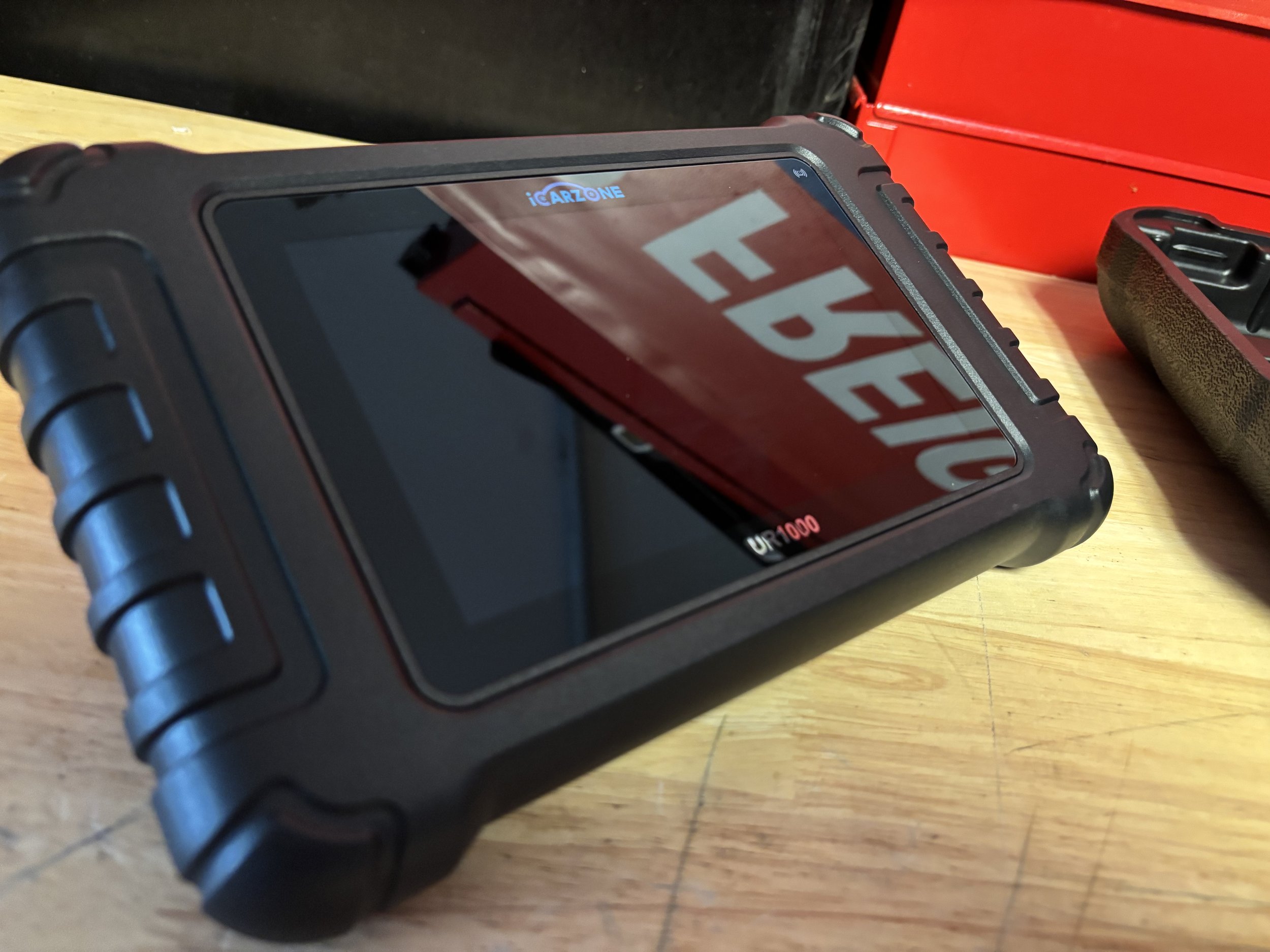
ICARZONE UR1000 Review: Does It Actually Help You Fix Your Truck?
Bottom line up front: My original testing exposed some real limitations with the UR1000, but one of them needed a second look. After ICARZONE explained that my 2019 Ram 1500 requires a 12+8 adapter to bypass its FCA Security Gateway for certain functions, the company overnighted me the adapter and I retested the scanner. It can now successfully clear codes on the Ram, but it still reports the vehicle as unsupported when I try to access the oil/service reset. My original compatibility problems with the 2000 Tacoma also remain. The retest improves my opinion of the UR1000, but the cheaper MUCAR 682 still completed more of the jobs I needed across these two trucks.
What I Actually Need a Scan Tool For
When I pull a scanner out in the driveway or the garage, it's usually for one of three things: figure out why a warning light is on, confirm a repair actually fixed the problem by clearing the code, or knock out a routine maintenance reset like an oil-life reminder. That's the real job.
I ran the UR1000 through that workflow on two trucks: my 2000 Toyota Tacoma and my 2019 Ram 1500. After my initial testing, I also went back and retested the Ram with the additional 12+8 Security Gateway bypass adapter supplied by ICARZONE.
Getting It Ready for the Garage
No complaints here. I updated everything before I started — no login, no account, no fuss. The OBD2 adapter is wireless, so I wasn't stuck sitting in the cab with a cable running to the dash while I worked. I could plug the adapter in, walk around to the engine bay or under the truck with the tablet in hand, and stay connected the whole time.
For anyone who's used a scanner with a 3-foot cable while trying to work on the vehicle at the same time, this is a real improvement. The UR1000 remains one of the nicer scan tools I've used from a hardware and usability standpoint.
On the Tacoma: Couldn't Even Get In the Door
The Tacoma is older, so I wasn't expecting fancy bidirectional functions. But I couldn't get the UR1000 to recognize the truck automatically, which meant I never got past basic, surface-level information. For a repair job, that's a significant compatibility limitation because I couldn't access the deeper vehicle-specific functionality I was looking for.
On the Ram: Found the Problem, Couldn't Fix It
The Ram is newer, and the UR1000 identified it right away. It scanned the truck's systems and pulled two trouble codes. That part of the job it handled well.
In my original testing, however, the UR1000 wouldn't clear those codes and couldn't perform the oil/service reset. After the review was published, ICARZONE contacted me and explained that my 2019 Ram 1500 requires a 12+8 adapter to bypass the FCA Security Gateway for certain diagnostic functions. That adapter wasn't part of my original test setup. ICARZONE overnighted me the required 12+8 adapter, so I went back outside and repeated the testing.
This time, the UR1000 successfully cleared the codes. ICARZONE was correct about the Security Gateway affecting that portion of my original test, and I'm updating the review to reflect it. The service functions were a different story. Even with the 12+8 adapter installed, I still couldn't perform the oil/service reset I tested. The UR1000 instead reported that the vehicle was not supported. So the adapter absolutely improved the UR1000's functionality on my Ram, but it didn't solve everything. I can now scan the truck, read its codes and clear them. I still couldn't complete the service-reset function I attempted.
How This Compares to the MUCAR 682
I keep a MUCAR 682 in the truck as a backup. It's wired instead of wireless, so it's less convenient to move around with, and it doesn't have the same polished tablet feel as the UR1000.
But across these two trucks, the MUCAR still completed more of the jobs I needed. It successfully identified my 2000 Tacoma, and on the Ram it successfully performed the oil/service reset that the UR1000 still reported as unsupported during my retest.
The comparison is closer after retesting the UR1000 with the 12+8 adapter, and ICARZONE deserves credit for identifying the Security Gateway issue. But if I'm choosing which scanner to grab for an actual job in my driveway, I still prefer the MUCAR — and it costs less.
Where the UR1000 Fits (and Doesn't)
If this were a bargain-bin scanner meant only for reading codes and giving you a general idea of what's wrong, none of this would be a big deal. My opinion of the UR1000 improved after the retest. The scanner wasn't incapable of clearing codes on my Ram as my original testing suggested; the FCA Security Gateway was preventing that function without the additional 12+8 adapter. Once the bypass was installed, code clearing worked correctly.
What remains are the compatibility limitations I actually observed: the UR1000 couldn't automatically identify my 2000 Tacoma, and even with the required bypass installed on the Ram, the oil/service reset I attempted still reported the vehicle as unsupported.
That's a much narrower criticism than I had after my first round of testing, and that's an important distinction. The hardware, wireless design and interface remain some of the UR1000's strongest qualities.
Vehicle-to-Vehicle Note
Scan-tool functionality can vary significantly by make, model, year and vehicle architecture. These results reflect my experience with one 2000 Toyota Tacoma and one 2019 Ram 1500. The Ram's FCA Security Gateway also materially affected my original test and required the additional 12+8 bypass adapter for code clearing.
Someone testing the UR1000 on a different vehicle may get very different results. I'm not saying the functions I encountered problems with will fail on every vehicle; I'm reporting what the scanner did on these two trucks during my testing and retesting.
Verdict
After retesting, the UR1000 is a more capable tool on my Ram than my original test indicated. With the 12+8 adapter installed, it successfully reads and clears codes, and ICARZONE deserves credit for identifying the reason my original code-clearing test failed.
But my overall buying recommendation hasn't changed. The UR1000 still couldn't perform the oil/service reset I attempted on the Ram, and my original Tacoma compatibility problems remain. Across these two trucks, the cheaper MUCAR 682 completed more of the repair and maintenance functions I needed.
The UR1000 wins on wireless hardware and overall user experience. For the actual jobs I performed, the MUCAR 682 still wins on functionality.